






- Find the best broker for your trading needs
- Compare spreads, fees, and platforms
- Read in-depth reviews and analysis


Select a different country or region to view content tailored to your location.

FxScouts helps traders across the globe by meticulously testing and reviewing online brokers and providing Forex education and market analysis. Our partners compensate us through paid advertising. While partners may pay to provide offers or be featured, they cannot pay to alter our recommendations, advice, ratings, or any other content. Our content and research teams do not participate in any advertising planning nor are they permitted access to advertising campaign data. For more detailed information click this link.

Alison Heyerdahl is the Head of Content at FxScouts, a Chartered Market Technician (CMT), and an experienced trader, as well as a financial writer with extensive expertise in Forex trading, broker analysis, and market research. She has reviewed 100+ brokers, publishes weekly YouTube trading videos, and co-hosts the “Let’s Talk Forex” podcast.

Alison Heyerdahl is the Head of Content at FxScouts, a Chartered Market Technician (CMT), and an experienced trader, as well as a financial writer with extensive expertise in Forex trading, broker analysis, and market research. She has reviewed 100+ brokers, publishes weekly YouTube trading videos, and co-hosts the “Let’s Talk Forex” podcast.
Chris Cammack is the Partner Manager and a financial writer at FxScouts. Chris builds and maintains our relationships with our partners to provide our users with the best Forex trading experience.
The spread is the one cost you can’t avoid – deducted on every trade, every pair, every session. Over hundreds of trades, the difference between a tight and loose spread adds up fast. Most traders overlook the cost quietly eating into every result, and headline numbers rarely tell the full story.
Here, I break down which brokers actually deliver the lowest trading costs, how to compare them properly, and where the hidden costs sit. Every broker on this list was selected for their low spread offering. They all share the following:
Trusted. Transparent. Tested.
For over a decade, we’ve set the standard in forex broker reviews—collecting thousands of data points yearly to deliver unbiased, expert-backed insights. Read our full review process here.
Skip the trial and error! Below, you’ll find the best forex brokers for South African traders for 2026—thoroughly tested, verified, and ranked, so you can trade with confidence.

When comparing low-spread brokers, regulation is just as important as cost. The Financial Sector Conduct Authority (FSCA) protects South African traders by ensuring brokers operate transparently and fairly.
Here’s why FSCA regulation is essential when selecting a low-spread broker:
Tip: A broker offering tight spreads and low commissions may seem appealing, but always verify that they hold a valid FSCA licence before you deposit funds. This is the best way to ensure both low trading costs and a secure trading environment.
Swipe to scroll
Broker | Overall Rating Our broker score evaluates brokers on platform quality, fees, service, regulation, and instruments. Higher scores reflect better performance and reliability. | Visit Broker Website Click to visit the broker’s official website for more information and to open an account. | Account Name | Trading Cost Raw Spread Account: Total trading cost at the time of last update, for 1 lot of EUR/USD. Includes spread and commission. | Min. Deposit The minimum deposit required to trade using the selected account | Trading Commission | EUR/USD (Raw) EURUSD spread on account with best pricing available for pro traders. | Compare Select two brokers using the checkboxes to compare their features, fees, platforms, and more side by side. |
|---|---|---|---|---|---|---|---|---|
 | RAW | USD 6 | AUD 100 | 6 USD / lot | 0 pips | |||
 | cTrader Razor | USD 7 | USD 0 | 6 USD / lot | 0.10 pips | |||
 | Zero | USD 7 | USD 0 | 6 USD / lot | 0.10 pips | |||
 | XM Ultra Low | USD 1 | USD 5 | Spread Only | 0.60 pips | |||
 | Pro Raw Spread MT4 | USD 7 | USD 200 | 7 USD / lot | 0 pips | |||
 | RAW - MetaTrader | USD 7.20 | USD 200 | 7 USD / lot | 0.02 pips | |||
 | Raw | USD 7 | USD 100 | 6 USD/lot | 0.10 pips | |||
 | Zero.MT5 | USD 7 | USD 100 | 6 USD / lot | 0.10 pips | |||
 | Raw | USD 7.60 | AUD 100 | 7 USD / lot | 0.06 pips | |||
 | Zero | USD 4.50 | AUD 0 | 4.5 USD/lot | 0 pips |










Select another broker to another broker to compare features, fees, and platforms side by side.
Find Your Ideal Forex Broker
Select another broker to another broker to compare features, fees, and platforms side by side.
0.0 pips
CMA, FSA-Seychelles, FSC, FSCA, ASIC
USD 100
TradingView, cTrader, MT5, MT4
500:1
Spreads on EUR/USD average 0.1 pips, with $3 commission—ideal for scalpers trading high volume.
One of the few brokers offering local funding for South Africans in ZAR with true ECN pricing.
Fast routing to New York liquidity hubs ensures <100ms execution from most parts of SA.
Offers trader toolbox including alarm managers and correlation indicators to improve decision making.
Open positions as low as 0.01 lots with institutional pricing.
Traders are limited to standard MT4/5 mobile, which lacks modern UI for beginners.
Not ideal for ultra-small deposit traders testing live markets.
FP Markets | Best For: Raw spread trading with ZAR deposit support

FxScouts
 YouTube
Select another broker to another broker to compare features, fees, and platforms side by side.

0.0 pips
CMA, BaFin, ASIC, FCA, CySEC
USD 0
Pepperstone Platform, TradingView, cTrader, MT5, MT4
400:1
EUR/USD spreads average 0.09 pips, one of the lowest globally.
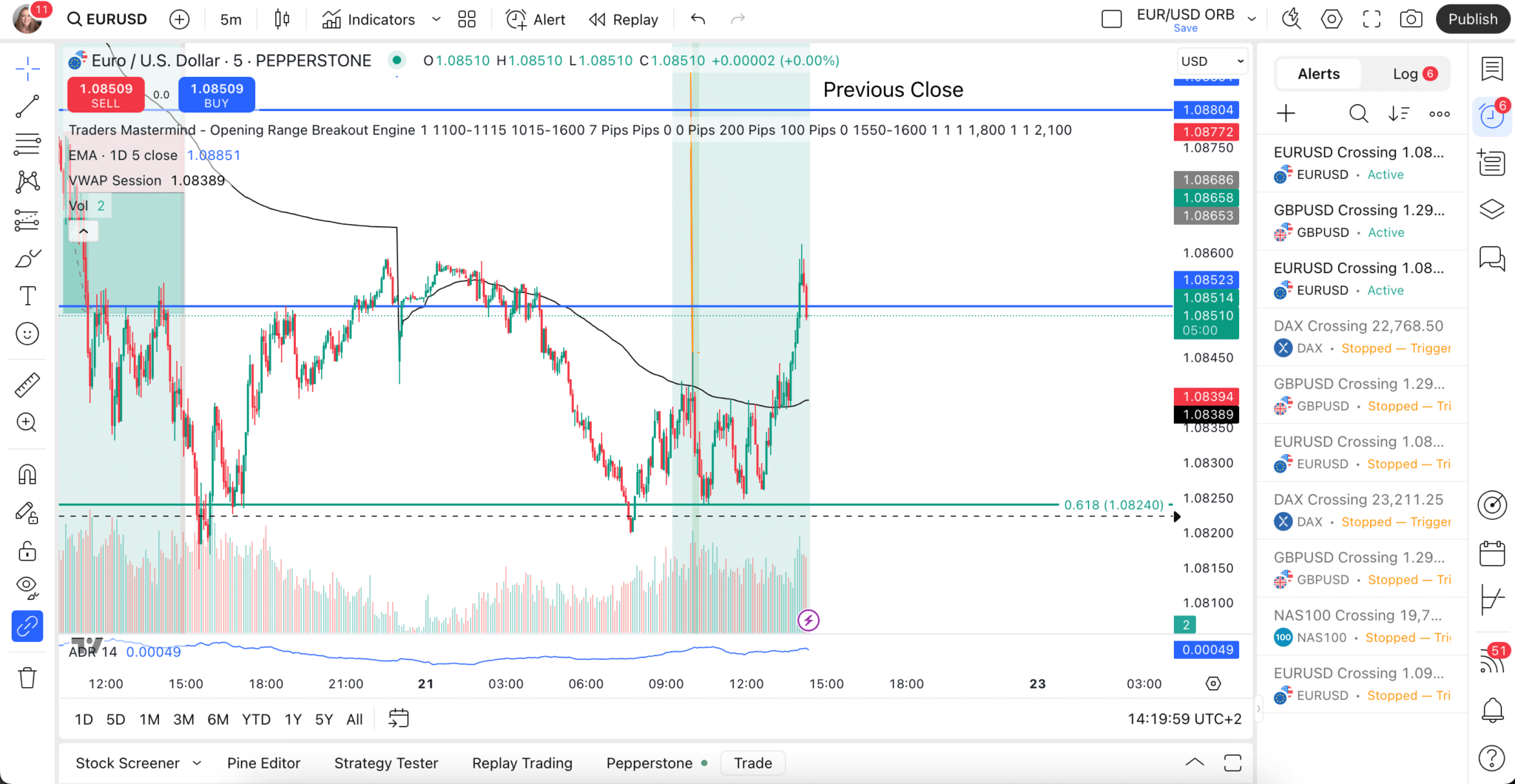
Access low spreads on MT4, MT5, cTrader, and TradingView—rare versatility for low-spread traders.
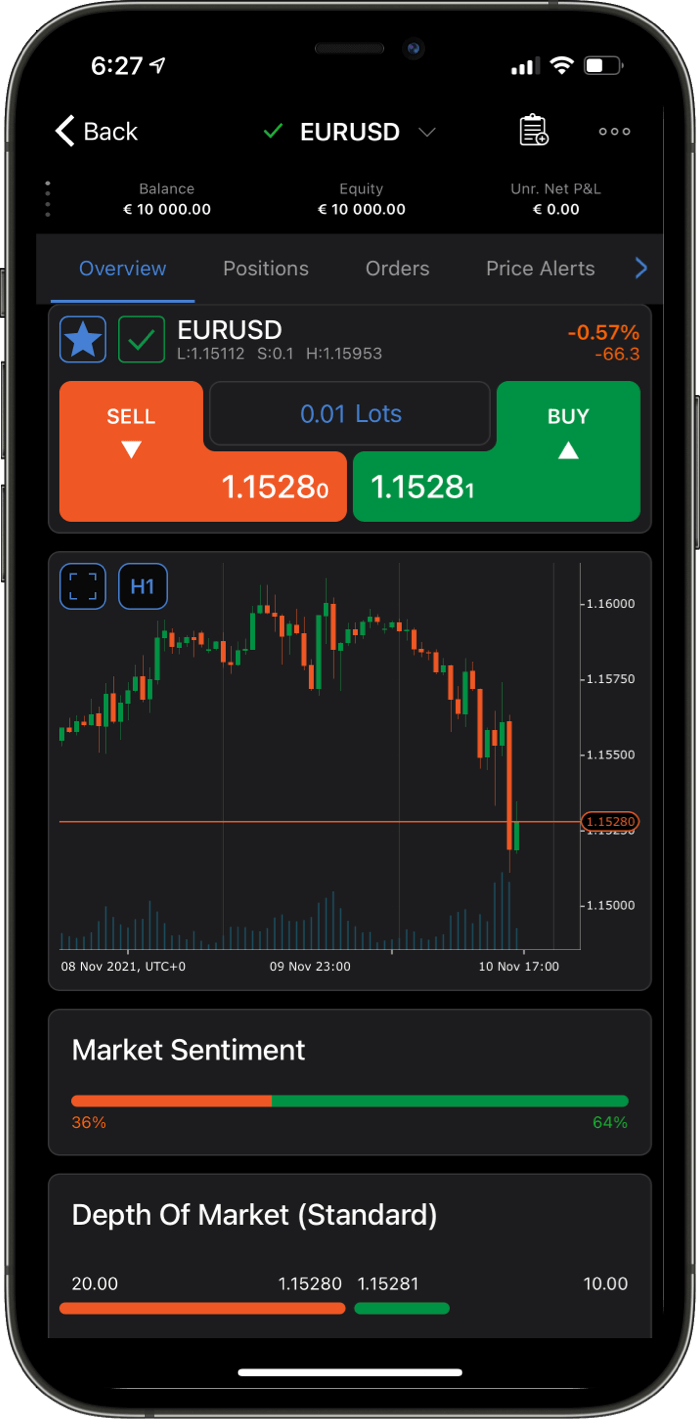
Pepperstone’s plugins improve MT4/5 with 28+ tools (e.g., sentiment, mini terminal, and market depth).
Orders fill fast even during ZAR news events, with high-quality liquidity.
Based on latency tests to EU servers from Johannesburg.
South Africans trade via offshore entity, which may concern risk-averse traders.
Funding is in USD or EUR, so currency conversion fees may apply.
Pepperstone | Best For: Platform flexibility with consistently low spreads
FxScouts
YouTube
Select another broker to another broker to compare features, fees, and platforms side by side.
0.0 pips
CMA, FSA-Seychelles, FSC, DFSA, FSCA, FCA
ZAR 0
HFM Trading App, MT5, MT4
2000:1
Offers EUR/USD spreads starting from 0.1 pips, with commissions as low as $3 per lot.
Ideal for South African traders who want local compliance and ZAR deposits.
Choose between Premium, Zero, and Pro accounts based on spread needs and trading style.
Includes market sentiment, trading calculators, and live analysis features.
Includes deposit match and loyalty rewards, often region-specific.
While low under normal conditions, spreads can spike during volatility.
No access to TradingView or cTrader for alternative execution environments.
HFM | Best For: Low deposit traders wanting tight spreads and FSCA safety
FxScouts
YouTube
Select another broker to another broker to compare features, fees, and platforms side by side.
0.6 pips
DFSA, FSC, FSCA, ASIC, CySEC
USD 5
MT5, MT4
1000:1
Spreads from 0.1 pips with zero commission—a unique model that balances cost and simplicity.
Trade 0.01 lots with minimal margin and tight spreads, ideal for testing strategies.
Choose between Micro, Standard, and Ultra Low with clear spread tiers.
Spread consistency is monitored even during volatile sessions like USD/ZAR news releases.
Perfect for first-time traders navigating spread mechanics.
Operates under offshore licenses for South African clients.
Spreads are tight but not as low as true ECN accounts with direct market access.
XM | Best For: Beginner traders testing low-spread environments
FxScouts
YouTube
Select another broker to another broker to compare features, fees, and platforms side by side.
0.1 pips
JSC, CMA, FSA-Seychelles, FSC, B.V.I FSC, FSCA
USD 3
Exness Terminal, MT5, MT4
Unlimited:1
EUR/USD spreads from 0.0 pips, with $3.5 commission per lot.
Top-rated for 24/7 instant withdrawals via Skrill, crypto, and local bank options.
Trade in your local currency under South African regulation.
High-risk strategies can thrive with leverage flexibility on non-FSCA accounts.
Real-time spread statistics available to verify average spreads across pairs.
Standard, Raw, Zero, and Pro can confuse new traders choosing between spread models.
MT4/MT5 only; lacks TradingView, cTrader, or proprietary app innovation.
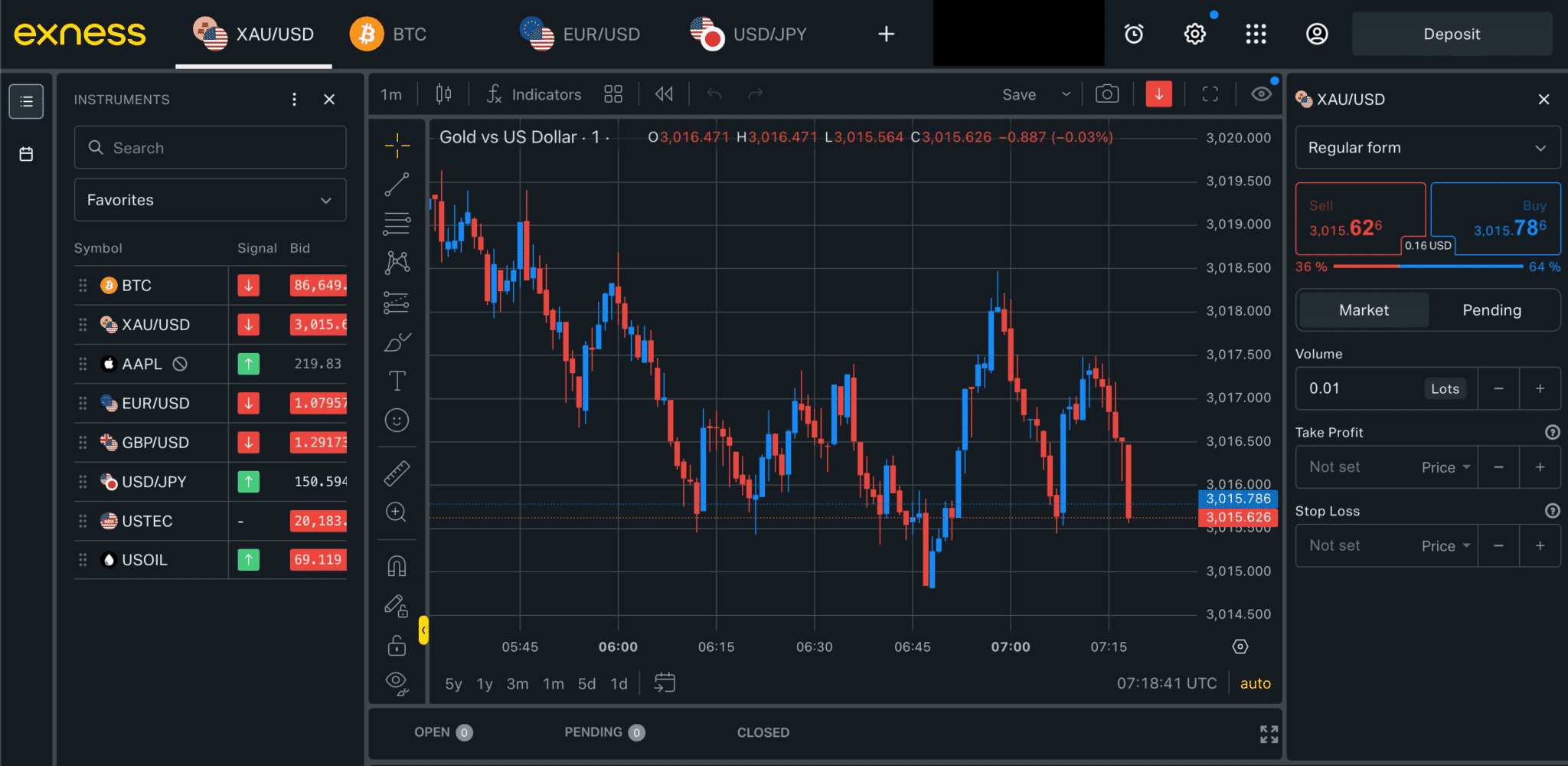
Exness | Best For: South Africans wanting ultra-tight spreads + instant withdrawals
FxScouts
YouTube
Select another broker to another broker to compare features, fees, and platforms side by side.
Most traders obsess over strategy, platforms, and leverage, but overlook the cost that affects every single trade they place. The spread is paid the moment you open a position. Understanding it and knowing how to compare it accurately is one of the most practically valuable things I’ve learned as a trader, and it’s what I want to pass on here.
A forex spread is the difference between the bid price (the price at which the market will buy from you) and the ask price (the price at which the market will sell to you). Spreads are measured in pips, the smallest standard unit of price movement in forex. Without going into too much detail, a pip represents $0.0001 for most pairs (and $0.01 for Japanese Yen pairs).
Watch this great video on how pips work for a more detailed explanation.
Here’s a simple example: if EUR/USD is quoted at 1.1000 (ask price) / 1.0998 (bid price), the spread is 2 pips. That means every position I open starts 2 pips in the red – I have to earn that back before I’m in profit. Early on, I didn’t think much of it. A pip here, a pip there, it’s only a fraction after all, but once I started tracking my costs across a full month of trading, I realised how quickly it adds up. Over hundreds or thousands of trades, the spread is one of the biggest line items in your trading costs, and most traders never look at it that closely.
From what I’ve seen, spreads vary depending on several factors:
This is the most important concept to understand before choosing a low-spread broker. A broker advertising ‘0.0 pip spreads’ is not offering free trading, they charge a commission instead. The total cost depends on both the spread and the commission combined.
A standard account has no per-trade commission. The broker earns money by marking up the spread – typically adding 0.6 to 1.0 pip above the raw interbank price. On a standard lot (100,000 units), 1 pip on EUR/USD equals roughly $10, so a 1.0 pip standard spread costs $10 to enter a position. I like the simplicity of this model because it’s predictable and easy to budget around, but it’s also more expensive for anyone trading actively.
A raw account passes on the interbank spread with no markup – typically 0.0 to 0.2 pips on EUR/USD – and charges a fixed commission per lot instead. The all-in cost is spread plus commission. When I first switched to a raw account, the difference was immediately obvious: a 0.17 pip spread plus a $7 round-turn commission equals $8.70 total per standard lot – versus $10 on a 1.0 pip standard account. For traders placing many trades, this saving compounds significantly over time.
I’ve put together an all-in cost comparison so you can see what you actually pay per standard lot on EUR/USD at some of the top low-spread brokers:
| Broker | Account | Avg spread (EUR/USD) | Commission (RT) | All-in cost |
|---|---|---|---|---|
| FP Markets | Raw | 0.10 pips | $6.00 ✓ | ~$7.00 / ~0.70 pips ✓ |
| Pepperstone | Razor (raw) | 0.10 pips | $7.00 | ~$8.00 / ~0.80 pips |
| Exness | Raw Spread | 0.10 pips | $7.00 | ~$8.00 / ~0.80 pips |
| HFM | Zero (raw) | 0.10 pips | $6.00 | ~$7.00 / ~0.70 pips |
| XM | Zero (raw) | 0.10 pips | $7.00 | ~$8.00 / ~0.80 pips |
| FP Markets | Standard | 1.10 pips | $0 | ~$11.00 / ~1.10 pips |
| Pepperstone | Standard | 1.00 pips | $0 | ~$10.00 / ~1.00 pips |
| Exness | Standard | 1.00 pips | $0 | ~$10.00 / ~1.00 pips |
| HFM | Premium (standard) | 1.20 pips | $0 | ~$12.00 / ~1.20 pips |
| XM | Ultra Low | 0.80 pips | $0 | ~$8.00 / ~0.80 pips |
All-in cost = (avg spread × $10) + round-turn commission, per standard lot (100,000 units) on EUR/USD. Spread averages are based on peak London/New York session liquidity and sourced from FxScouts broker reviews. Spreads widen outside peak hours and during news events.
The practical conclusion is that for active traders placing 20 or more trades per month at standard lot sizes, a raw account is materially cheaper than any standard account. For traders placing fewer than 10 to 15 trades per month at smaller sizes, the simplicity of a standard account often outweighs the marginal cost saving. I’d choose based on how frequently you actually trade, not how frequently you plan to trade.
While tight spreads can be important, they’re not equally important to every trader. Whether they materially affect your profitability depends entirely on how you trade. Here’s my rule-of-thumb based on my own experience across different styles.
Scalping targets profits of a few pips per trade by opening and closing positions quickly. For example, a 1.0 pip spread on a 3-pip target means you need a 1.0 pip move before you break even, while a 0.17 pip spread on the same trade means you’re profitable after 0.17 pips. When I tested scalping strategies, this difference was immediately obvious. My results changed noticeably depending on which broker I used. For scalpers placing 50 to 200 trades per month, the difference between a 0.54 pip and a 1.0 pip all-in cost can run to hundreds of dollars a month. In my view, for scalping, a raw account at the tightest-spread broker you can find is almost a prerequisite if you’re serious about it.
I spend most of my trading time as a day trader, so I know this one pretty well. When holding positions for minutes to hours, the spread is a constant presence, particularly on frequently traded pairs. I’ve done the maths: the all-in cost difference between 0.54 pips and 1.0 pips on 20 trades per week at a standard lot is roughly $92 per week, that’s over $4,700 per year. Once I saw that number, switching to a raw account made more sense. For anyone operating at meaningful volume, the added complexity of a commission structure can be worth it.
Automated strategies depend on tight, consistent spreads and fast execution to function as designed in backtests. I’ve run EAs that looked profitable on my demo account, but fell apart on a live account because the spread conditions were completely different. A strategy tested at 0.1 pip spreads that encounters 1.0 pip live spreads can produce very different results. If you’re running EAs, strongly consider brokers whose demo spreads match live conditions and whose execution infrastructure is co-located with major liquidity hubs.
If you’re targeting 100 to 500 pips per trade over days or weeks, the difference between 0.54 pips and 1.0 pips is largely irrelevant relative to the trade target. I’ve done longer-term trades where the spread was the last thing on my mind, and rightly so. For swing and position traders, regulation, platform quality, and overnight swap rates matter more than the headline spread. For this type of trading, I’ve found that the simplicity of a standard account is often a better fit, and to me that’s completely fine.
As mentioned before, the advertised minimum spread is a starting point, not the full picture. Many new traders (me included) have made the mistake early on of taking the headline number at face value. Having learned this lesson, these are the four things I check before opening any low-spread account.
A broker advertising ‘0.0 pips on EUR/USD’ is quoting the minimum – the tightest the spread ever reaches, usually for a fraction of a second during peak liquidity. That number is basically just marketing. And while you can technically get that, what matters more is the average spread across a session. Some brokers are upfront about this. I won’t open an account now without comparing averages first, not minimums, for the account type and pair I’m trading.
Milliseconds matter. A tight spread means nothing if your order doesn’t fill at the quoted price. Slippage is the gap between what you see and what you get, and it can wipe out a 0.1 pip spread advantage in a single trade. I’ve had sessions where my entry price was clearly worse than what I clicked – usually during volatile moments or thin liquidity. If you’re scalping or running EAs, the execution infrastructure behind the spread matters just as much as the spread itself. Many brokers advertise their average execution speeds, so remember to also look at this number when making a decision.
Every broker I’ve tested widens their spreads during major announcements like NFP, CPI, rate decisions. A EUR/USD spread sitting at 0.09 pips can jump to 5–10 pips for a few seconds around a high-impact release. I’ve had stop-losses triggered not by the market moving against me, but purely by the spread blowing out during a news spike. If you trade around these windows, factor it in, otherwise it will catch you out.
Raw account commissions at top-ranking brokers vary. I always check whether there’s a volume tier available before I assume the published commission is my actual cost – it’s an easy thing to miss, and the savings add up. Just remember to be realistic about the volume you are going to trade, rather underestimate than overestimate.
Different traders have different cost and platform priorities. Based on my testing, here’s what I’d recommend depending on your situation.
| My situation | Best pick | Why |
|---|---|---|
| I want the lowest all-in raw cost with strong regulation | FP Markets | Raw account at ~0.70 pips all-in, $3/side commission, ASIC, CySEC, and FSCA regulated, MT4, MT5, cTrader, and TradingView available, ZAR base currency supported |
| I want the most platforms with fast execution | Pepperstone | Razor account at ~0.80 pips all-in on MT4, MT5, cTrader, and TradingView – FCA, ASIC, CySEC, and DFSA regulated, no minimum deposit |
| I want a locally regulated broker with ZAR accounts | HFM | FSCA regulated (FSP No. 46632), Zero account at ~0.70 pips all-in, ZAR base currency available, local bank transfer support, MT4, MT5, and HFM App |
| I want the lowest commission-free spread | XM | Ultra Low account at just 0.80 pips with zero commission – $5 minimum deposit, multi-regulated (CySEC, FSCA), MT4 and MT5 |
| I want low raw spreads with instant withdrawals | Exness | Raw Spread account at ~0.80 pips all-in, $3.50/side commission, instant withdrawals, ZAR base currency, $200 minimum deposit for professional accounts |
Most low-spread brokers offer both a standard and a raw account. Here’s the process I follow to select and open the right one for me. Your trading needs will differ, but the steps stay the same.
I use the all-in cost comparison table on this page to calculate the real cost for my intended trading frequency and position size. If you trade fewer than 15 trades per month at micro or mini lot sizes, a standard account may be simpler and not materially more expensive. If you trade frequently at standard lot sizes, a raw account will almost always be cheaper over time. I’d base this decision on how you actually trade, not how you aspire to. Remember, be realistic and honest with yourself.
Before I open an account, I find the broker’s published average spread data for the account type and pair I plan to trade. The all-in cost column in the comparison table above uses FxScouts-verified averages. If a broker only publishes minimum spreads, I treat advertised ‘0.0 pip’ figures with scepticism until I can verify average spread data independently. I’ve been caught out by this before, and now I always do my own checks.
I open a demo on the raw account, not the standard, if that’s what I plan to trade live. I test the actual spread behaviour during my intended trading hours across at least one week. Spreads during my specific session have differed from peak-hour averages more often than I expected, and I’ve found this step saves me from surprises later.
All regulated brokers require KYC (Know Your Customer) identity verification before a live account can be funded. In my experience, this typically takes a few hours. I always have a government-issued ID and proof of address ready to go. If a broker doesn’t require these documents, it’s a big red flag.
In your first week of live trading, monitor the actual spread on your account during the sessions you trade. Confirm that live spreads are consistent with what you observed in the demo and what the broker publishes. If they diverge significantly, contact support for an explanation before scaling up. I’ve had to do this once – it’s worth checking. Remember, if you’re unsure, ask.


Find answers to common questions about low-spread Forex brokers, including what is considered a low spread, why they matter, and the differences between raw spread and standard accounts.
It’s the difference between the bid (sell) and ask (buy) price of a currency pair, measured in pips. It’s the primary transaction cost on every trade. A 1.0 pip EUR/USD spread means your trade starts 1.0 pip in the negative – the market has to move 1.0 pip in your favour before you break even. On a standard lot, 1 pip equals roughly $10 for USD-quoted pairs.
A raw account offers the interbank spread with no broker markup – typically 0.0–0.2 pips on EUR/USD – and charges a fixed commission per lot instead. This passes institutional-grade pricing to retail traders. The all-in cost is spread plus commission. Raw accounts are also called ECN accounts, Zero accounts, or Razor accounts depending on the broker.
For active traders, yes. For low-frequency traders, not necessarily. When I compared the numbers, a FP Markets raw account costs roughly $6.90 all-in per standard lot versus $10.00 on their standard account – a $3.10 saving per trade. Over 50 trades per month at standard lot sizes, that’s $155 per month I’d be leaving on the table. For traders placing fewer than 10 small trades per month, the commission complexity may not be worth the saving.
FP Markets, at approximately $6.90 per standard lot on its Raw account (0.09 pips average spread plus $6.00 round-turn commission). Pepperstone offers a raw spread averaging 0.17 pips, with a slightly higher all-in cost of roughly $8.70. The best choice depends on your platform preferences and whether you prioritise the lowest spread or the lowest total cost.
Yes, always – at every broker, on every account type. During high-impact releases (NFP, CPI, central bank decisions), liquidity providers pull back and brokers widen their quotes. A EUR/USD spread that averages 0.09 pips can briefly widen to 5–10 pips during a news spike. Strategies that trade around news events should account for this directly. I’ve seen stop-losses triggered by the spread widening alone.
Major pairs – EUR/USD, USD/JPY, GBP/USD, AUD/USD, USD/CAD, USD/CHF, NZD/USD – consistently have the tightest spreads because they’re the most liquid. EUR/USD typically has the lowest spread of all. Minor pairs (EUR/GBP, EUR/JPY) are moderately wider, and exotic pairs can be 10–20x wider than EUR/USD even at the lowest-spread brokers on this list.
No. Raw accounts offer lower costs for active traders but add commission complexity that’s unnecessary for beginners trading small sizes infrequently. When I started out, I used a standard account and I’d recommend the same – it’s simpler to understand and budget around while you’re learning. The cost difference on a single small trade is a few dollars at most. Raw accounts become worthwhile once you’re placing 20 or more trades per month, or trading at standard lot sizes regularly.
Slippage happens when your order fills at a different price than the one shown when you clicked buy or sell. It occurs most often during news events or low-liquidity periods, and it adds to your effective trading cost on top of the spread. A 0.09 pip spread is far less useful if you’re regularly experiencing 0.3 pip slippage at execution. This is why execution speed and server infrastructure matter as much as the spread when choosing a low-cost broker.
For a standard account: total cost = spread in pips × $10 per standard lot. For a raw account: total cost = (spread in pips × $10) + round-turn commission. To compare accounts on equal terms, convert the commission to a pip equivalent by dividing by $10. Example: $6.00 commission = 0.6 pip equivalent. A 0.09 pip raw spread plus $6.00 commission = 0.69 pip all-in cost = $6.90 per standard lot. This formula is the only reliable way to compare brokers across different account structures – and it’s the one I use every time.
Explore more resources that fellow traders find helpful! Check out these other guides to enhance your forex trading knowledge and skills. Whether you’re searching for the best brokers, educational material, or something more specific, we’ve got you covered.

Compare the best Forex trading platforms for 2026, including MT4, MT5, cTrader, and TradingView. Find the right tools to enhance your trading experience.

What is Forex trading and how does it work? An easy-to-read guide including how to trade, and how to choose a reliable broker.

Compare FSCA-regulated forex brokers in South Africa by ZAR accounts, local deposit methods, withdrawal speed, spreads, and platform support. Independently tested for South African traders.
60-90% of retail traders lose money trading Forex and CFDs. You should consider whether you understand how CFDs and leveraged trading work and if you can afford the high risk of losing your money. We may receive compensation when you click on links to products we review. Please read our advertising disclosure. By using this website, you agree to our Terms of Service.
Partner Manager and Financial Writer
Head of Content
Financial Writer




Welcome to the FxScouts community! We’re thrilled to have you on board. You’ve successfully signed up for our forex newsletter, where you’ll receive expert insights, market analysis, and the latest news straight to your inbox.
Get ready to stay ahead of the curve with our regular updates designed to help you make informed trading decisions.
Happy trading!
The FxScouts Team