





- Find the best broker for your trading needs
- Compare spreads, fees, and platforms
- Read in-depth reviews and analysis


Select a different country or region to view content tailored to your location.

FxScouts helps traders across the globe by meticulously testing and reviewing online brokers and providing Forex education and market analysis. Our partners compensate us through paid advertising. While partners may pay to provide offers or be featured, they cannot pay to alter our recommendations, advice, ratings, or any other content. Our content and research teams do not participate in any advertising planning nor are they permitted access to advertising campaign data. For more detailed information click this link.

Alison Heyerdahl is the Head of Content at FxScouts, a Chartered Market Technician (CMT), and an experienced trader, as well as a financial writer with extensive expertise in Forex trading, broker analysis, and market research. She has reviewed 100+ brokers, publishes weekly YouTube trading videos, and co-hosts the “Let’s Talk Forex” podcast.

Alison Heyerdahl is the Head of Content at FxScouts, a Chartered Market Technician (CMT), and an experienced trader, as well as a financial writer with extensive expertise in Forex trading, broker analysis, and market research. She has reviewed 100+ brokers, publishes weekly YouTube trading videos, and co-hosts the “Let’s Talk Forex” podcast.
Chris Cammack is the Partner Manager and a financial writer at FxScouts. Chris builds and maintains our relationships with our partners to provide our users with the best Forex trading experience.
PAMM and MAM accounts let you invest in Forex by allocating funds to an experienced trader (a “money manager”) who trades on your behalf. They’re popular with investors who want market exposure without placing trades manually—and with skilled traders who want to earn performance fees by managing capital. But broker quality matters: the platform controls reporting, allocations, fee handling, and withdrawals, and “PAMM/MAM” labels can vary. This guide explains how PAMM and MAM accounts work, the key risks and costs, and how to choose the best broker and manager in 2026.
Trusted. Transparent. Tested.
For over a decade, we’ve set the standard in forex broker reviews—collecting thousands of data points yearly to deliver unbiased, expert-backed insights. Read our full review process here.
Skip the trial and error! Below, you’ll find the best forex brokers for South African traders for 2026—thoroughly tested, verified, and ranked, so you can trade with confidence.

Swipe to scroll
Broker | Official Site | PAMM Account | MAM Account | FSCA Regulated | EUR/USD - Standard Account This is the spread on EUR/USD using the account with the smallest deposit requirements. | Trading Cost - Standard Account Total trading cost at the time of last update, for 1 lot of EUR/USD using the account with the lowest minimum deposit. Includes spread and commission. | EUR/USD - Raw Spread EURUSD spread on account with best pricing available for pro traders. | Trading Commission | Compare | ||||
|---|---|---|---|---|---|---|---|---|---|---|---|---|---|
 | Yes | Yes | Yes | 0.00 pips | USD 6 | 0 pips | 6 USD / lot - RAW Accounts | 10162 | 70 | ||||
 | No | No | Yes | 0.00 pips | USD 6 | 0.10 pips | 6 USD/lot | 612 | 62 | ||||
 | Yes | Yes | Yes | 0.00 pips | USD 6 | 0.00 pips | 6 USD / lot - ECN Account | 1058 | 63 | ||||
 | Yes | Yes | No | 0.60 pips | USD 6 | 0.60 pips | Fees Included in Spread | 1554 | 57 | ||||
 | No | No | No | 0.10 pips | USD 8 | 0.02 pips | 7 USD / lot - Raw Spread Account | 1744 | 64 |





Select another broker to another broker to compare features, fees, and platforms side by side.
Find Your Ideal Forex Broker
Select another broker to another broker to compare features, fees, and platforms side by side.
0.0 pips
CMA, FSA-Seychelles, FSC, FSCA, ASIC
USD 100
TradingView, cTrader, MT5, MT4
500:1
FP Markets supports Multi-Account Manager (MAM) systems with full allocation methods, offering managed trading to qualified clients.
Institutional-grade liquidity ensures that managed account strategies benefit from raw spreads as low as 0.0 pips and tight execution.
Account managers can trade across MT4 and MT5, ensuring seamless strategy execution with expert advisors and automation.
Headquartered in Australia and registered under FSCA as a juristic rep, FP Markets provides transparency for South African MAM clients.
Minimum account thresholds for fund managers can exceed $2,000, making it less accessible to small investors or part-time managers.
Investors must rely on third-party tools or manager updates to track performance; there’s no built-in performance monitoring dashboard.
FP Markets | Best For: South African investors seeking licensed MAM/PAMM structures with ECN pricing and platform diversity

FxScouts
 YouTube
Select another broker to another broker to compare features, fees, and platforms side by side.

0.0 pips
FSA-Seychelles, DFSA, FSCA, FCA, CySEC
USD 100
TradingView, MT5, MT4
1000:1
Tickmill offers MAM accounts through request-based access, suitable for high-performing managers with verified track records.
With data centers close to liquidity providers, Tickmill delivers average execution speeds of 0.20 seconds, important for active strategies.
Spreads from 0.0 pips and commission of $2 per side per lot make managed strategies more cost-effective over time.
Well-regarded in the trading community, especially among scalpers and algo funds looking to manage client accounts with fast infrastructure.
Unlike brokers with built-in social investment platforms, Tickmill lacks a portfolio viewer or live manager ranking system.
Tickmill does not offer ECN market depth; execution is STP routed, which may matter for strategies requiring full order book visibility.

Tickmill | Best For: Traders or managers who prefer low-latency execution and STP conditions with tailored MAM access upon request.
FxScouts
YouTube
Select another broker to another broker to compare features, fees, and platforms side by side.
0.0 pips
CIMA, VFSC, FSCA, ASIC, FCA
USD 50
TradingView, ProTrader, MT5, MT4
500:1
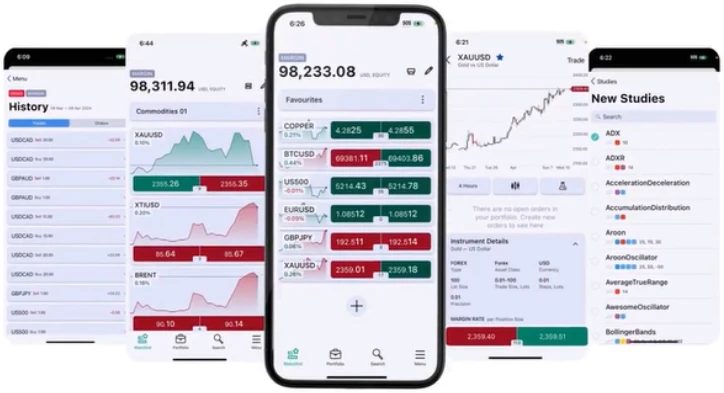
Vantage Markets (Pty) Ltd is fully licensed in South Africa (FSP 51268), giving investors peace of mind under local regulatory protections.
Vantage offers full support for PAMM and MAM solutions, enabling professional account managers to handle multiple investors with detailed allocation settings.
Retail clients can link to verified trading systems using AutoTrade, combining managed flexibility with social validation.
Performance tracking tools make it easy for investors to monitor their accounts or for managers to provide transparent reporting.
While Myfxbook AutoTrade is offered, there’s no exclusive Vantage-built interface like eToro or ZuluTrade.
Professional money managers must meet higher capital and compliance criteria before accessing Vantage’s managed infrastructure.
Select another broker to another broker to compare features, fees, and platforms side by side.
0.6 pips
DFSA, FSC, FSCA, ASIC, CySEC
USD 5
MT5, MT4
1000:1
XM integrates with MT5 trading signals, allowing clients to copy top-performing strategies with low latency execution and performance history.
Investors can start with as little as 0.01 lots, making it accessible for low-risk entry into managed strategies.
Only $5 is required to begin, making XM highly accessible to beginner investors exploring passive or assisted trading.
XM ZA (Pty) Ltd is FSCA-authorised (FSP No. 49976), although all trading accounts are held offshore under Belize’s XM Global Ltd.
XM does not offer professional PAMM or MAM infrastructure — only indirect access via signals through MT5.
Clients do not get local legal trading protection as accounts are ultimately held under Belize law.
XM | Best For: New investors interested in simplified copy trading via signals and access to MT5 multi-account tools.
FxScouts
YouTube
Select another broker to another broker to compare features, fees, and platforms side by side.
0.1 pips
CMA, FSA-Seychelles, ASIC, CySEC
USD 200
TradingView, cTrader, MT5, MT4
500:1
Offers a fully functional Multi-Account Manager structure, ideal for experienced traders handling large client portfolios across MT4 and MT5.
IC Markets connects to over 50 liquidity providers, offering true ECN conditions and ultra-tight spreads, especially on majors.
Traders benefit from Equinix NY4 server colocation, which helps reduce latency during high-frequency execution.
Investors may opt for social trading integrations or formal managed accounts depending on risk appetite and strategy complexity.
Despite strong international regulation, South African investors are served offshore without recourse to local regulators.
Formal onboarding for MAM structures requires compliance, verification, and volume expectations not suited for casual managers.
IC Markets | Best For: Professional money managers looking for high-speed MAM access with raw spreads and vast liquidity for volume trading.
FxScouts
YouTube

Select another broker to another broker to compare features, fees, and platforms side by side.


PAMM and MAM are managed-account structures offered by some Forex brokers. You allocate funds to a manager, and profits or losses are distributed according to a set formula. The main difference is control: MAM typically allows more flexible allocation and risk settings than PAMM.
A PAMM (Percentage Allocation Money Management) account pools funds from multiple investors and a manager into one “master” account. The manager trades the pooled capital, and each investor receives a share of profits or losses based on their percentage contribution. The broker’s system automatically calculates allocations and applies performance fees according to the terms you accept when investing.
The core appeal is simplicity: you choose a manager, allocate funds, and the broker handles the math and reporting. The trade-off is that you’re trusting someone else’s decision-making, and outcomes can vary widely.
In a PAMM structure, three parties matter:
Profits and losses are distributed proportionally, so if you contribute 20% of the pool, you receive 20% of the net result (after the manager’s performance fee, if applicable).
Imagine a pooled PAMM account of $10,000, with a manager charging a 15% performance fee on profits:
Month 1: The manager makes 20% on the pool ($2,000 profit).
Month 2: The account loses 10%.
This illustrates the key point: your returns track the manager’s performance, minus fees in profitable periods.
A MAM (Multi-Account Manager) account is also managed trading, but it usually offers more control and flexibility than PAMM. Depending on the broker’s system, MAM may allow:
In plain terms: PAMM is typically simpler and more standardised, while MAM is more configurable (which can be useful — but also easier to misunderstand).
These models are often grouped together, but they’re not identical:
If your priority is “hands-off investing,” PAMM and MAM are the most common broker-provided managed formats. If your priority is retaining control, copy trading is often easier to pause or adjust.
Managed accounts usually involve manager fees, plus normal trading costs within the strategy:
1) Performance fee (most common)
A percentage of profits over a period (often monthly). If the strategy is down for the period, performance fees are usually not charged.
2) Trading costs inside the strategy
Even if the broker doesn’t charge a separate “PAMM fee,” trades still incur:
3) Platform and funding fees (sometimes)
Depending on the broker: deposit/withdrawal charges, currency conversion fees, or inactivity fees.
The practical takeaway: evaluate the total cost, not only the manager’s performance fee.
Managed accounts can be useful when the structure matches your goals:
Managed accounts can also go wrong in predictable ways:
No managed account removes market risk—it mainly changes who is clicking the buttons.
Not all “PAMM brokers” offer the same level of safety or transparency. Prioritise:
1. Regulation and client protection
Look for reputable oversight, clear entity details, segregated client funds, and strong withdrawal controls.
2. Transparency of manager statistics
A serious platform should show:
3. Quality of the platform and reporting
You want clear allocation rules, reliable performance reporting, and transparent fee deductions.
4. Fees and funding friction
Check total costs (spreads/commissions/swaps) and how easy deposits/withdrawals are.
5. Selection and governance of managers
Better brokers tend to screen managers, provide minimum history requirements, and enforce platform rules (rather than listing anyone).
Treat manager selection like due diligence on a strategy — not a personality:
A simple rule: don’t allocate based on return alone — always compare return against drawdown and volatility.


Find answers to some of the most common questions investors have about managed accounts.
They can be, but safety depends on the broker’s regulation, platform controls (especially withdrawals), and the manager’s risk management. You can still lose money.
Usually yes — most charge a performance fee on profits. Some may also charge management fees depending on the platform.
It’s mostly used for Forex, but some brokers allow managed strategies across CFDs (indices, commodities, and sometimes crypto) depending on local rules.
Often yes, but some platforms have trading terms or rollover periods that affect when performance is calculated and when you can exit cleanly.
PAMM typically pools allocations and distributes results by formula. Copy trading mirrors trades into your account and often gives you more ability to stop, cap risk, or adjust exposure.
Explore more resources that fellow traders find helpful! Check out these other guides to enhance your forex trading knowledge and skills. Whether you’re searching for the best brokers, educational material, or something more specific, we’ve got you covered.

Compare the best Forex trading platforms for 2026, including MT4, MT5, cTrader, and TradingView. Find the right tools to enhance your trading experience.

What is Forex trading and how does it work? An easy-to-read guide including how to trade, and how to choose a reliable broker.

Compare FSCA-regulated forex brokers in South Africa by ZAR accounts, local deposit methods, withdrawal speed, spreads, and platform support. Independently tested for South African traders.
60-90% of retail traders lose money trading Forex and CFDs. You should consider whether you understand how CFDs and leveraged trading work and if you can afford the high risk of losing your money. We may receive compensation when you click on links to products we review. Please read our advertising disclosure. By using this website, you agree to our Terms of Service.
Partner Manager and Financial Writer
Head of Content
Financial Writer



Welcome to the FxScouts community! We’re thrilled to have you on board. You’ve successfully signed up for our forex newsletter, where you’ll receive expert insights, market analysis, and the latest news straight to your inbox.
Get ready to stay ahead of the curve with our regular updates designed to help you make informed trading decisions.
Happy trading!
The FxScouts Team