




- Find the best broker for your trading needs
- Compare spreads, fees, and platforms
- Read in-depth reviews and analysis


Select a different country or region to view content tailored to your location.

FxScouts helps traders across the globe by meticulously testing and reviewing online brokers and providing Forex education and market analysis. Our partners compensate us through paid advertising. While partners may pay to provide offers or be featured, they cannot pay to alter our recommendations, advice, ratings, or any other content. Our content and research teams do not participate in any advertising planning nor are they permitted access to advertising campaign data. For more detailed information click this link.

Alison Heyerdahl is the Head of Content at FxScouts, a Chartered Market Technician (CMT), and an experienced trader, as well as a financial writer with extensive expertise in Forex trading, broker analysis, and market research. She has reviewed 100+ brokers, publishes weekly YouTube trading videos, and co-hosts the “Let’s Talk Forex” podcast.

Alison Heyerdahl is the Head of Content at FxScouts, a Chartered Market Technician (CMT), and an experienced trader, as well as a financial writer with extensive expertise in Forex trading, broker analysis, and market research. She has reviewed 100+ brokers, publishes weekly YouTube trading videos, and co-hosts the “Let’s Talk Forex” podcast.
Chris Cammack is the Partner Manager and a financial writer at FxScouts. Chris builds and maintains our relationships with our partners to provide our users with the best Forex trading experience.
Trading the VIX — often called the market’s “fear index” — gives traders a way to speculate on, or hedge against, sudden jumps in market volatility. The VIX typically rises when markets fall sharply and investors demand protection, and it falls when markets stabilise. But volatility products behave differently from normal indices, and they can carry higher risk, especially through options, futures, or leveraged CFDs.
This guide explains what the VIX is, how volatility products work, and how to choose the best brokers in 2026 for trading or hedging market volatility safely and effectively.
Trusted. Transparent. Tested.
For over a decade, we’ve set the standard in forex broker reviews—collecting thousands of data points yearly to deliver unbiased, expert-backed insights. Read our full review process here.
Skip the trial and error! Below, you’ll find the best forex brokers for South African traders for 2026—thoroughly tested, verified, and ranked, so you can trade with confidence.

Swipe to scroll
Broker | Official Site | VIX 75 Index | Max. Leverage | Cost of Trading Total trading cost at the time of last update, for 1 lot of EUR/USD using the account with the lowest minimum deposit. Includes spread and commission. | Regulators | Compare | ||
|---|---|---|---|---|---|---|---|---|
 | Yes | USD 100 | 500:1 | USD 6 |      | |||
 | Yes | USD 0 | 400:1 | USD 7 |    | |||
 | Yes | ZAR 1900 | 400:1 | USD 9 |     | |||
 | Yes | ZAR 0 | 2000:1 | USD 10 |  | |||
 | Yes | USD 5 | 1000:1 | USD 6 |  | |||
 | Yes | USD 10 | 1000:1 | USD 17 | | |||
 | Yes | USD 0 | 500:1 | USD 7 |  | |||
 | Yes | USD 0 | 200:1 | USD 6 |      | |||
 | Yes | USD 200 | 500:1 | USD 8 | |









Select another broker to another broker to compare features, fees, and platforms side by side.
Find Your Ideal Forex Broker
Select another broker to another broker to compare features, fees, and platforms side by side.
0.0 pips
CMA, FSA-Seychelles, FSC, FSCA, ASIC
USD 100
TradingView, cTrader, MT5, MT4
500:1
Trade the Volatility Index (VIX) through CFD exposure on the US Volatility Index via MT5 — ideal for hedging during market stress.
FP Markets uses true ECN infrastructure, meaning low latency and tight institutional spreads when trading volatility spikes.
Choose from MT4, MT5, and TradingView — ideal for deploying volatility breakout strategies or using custom indicators on VIX-linked charts.
Locally regulated and accepts ZAR via bank transfer, offering convenience and compliance assurance for South Africans.
Traders using MT4 must upgrade to MT5 to access volatility index instruments like the VIX.
FP’s institutional-grade tools may overwhelm beginners not familiar with CFD mechanics or VIX hedging strategies.
FP Markets | Best For: Experienced South African traders seeking ECN execution and VIX exposure via powerful platforms like MT5 and TradingView.

FxScouts
 YouTube
Select another broker to another broker to compare features, fees, and platforms side by side.

0.0 pips
CMA, BaFin, ASIC, FCA, CySEC
USD 0
Pepperstone Platform, TradingView, cTrader, MT5, MT4
400:1
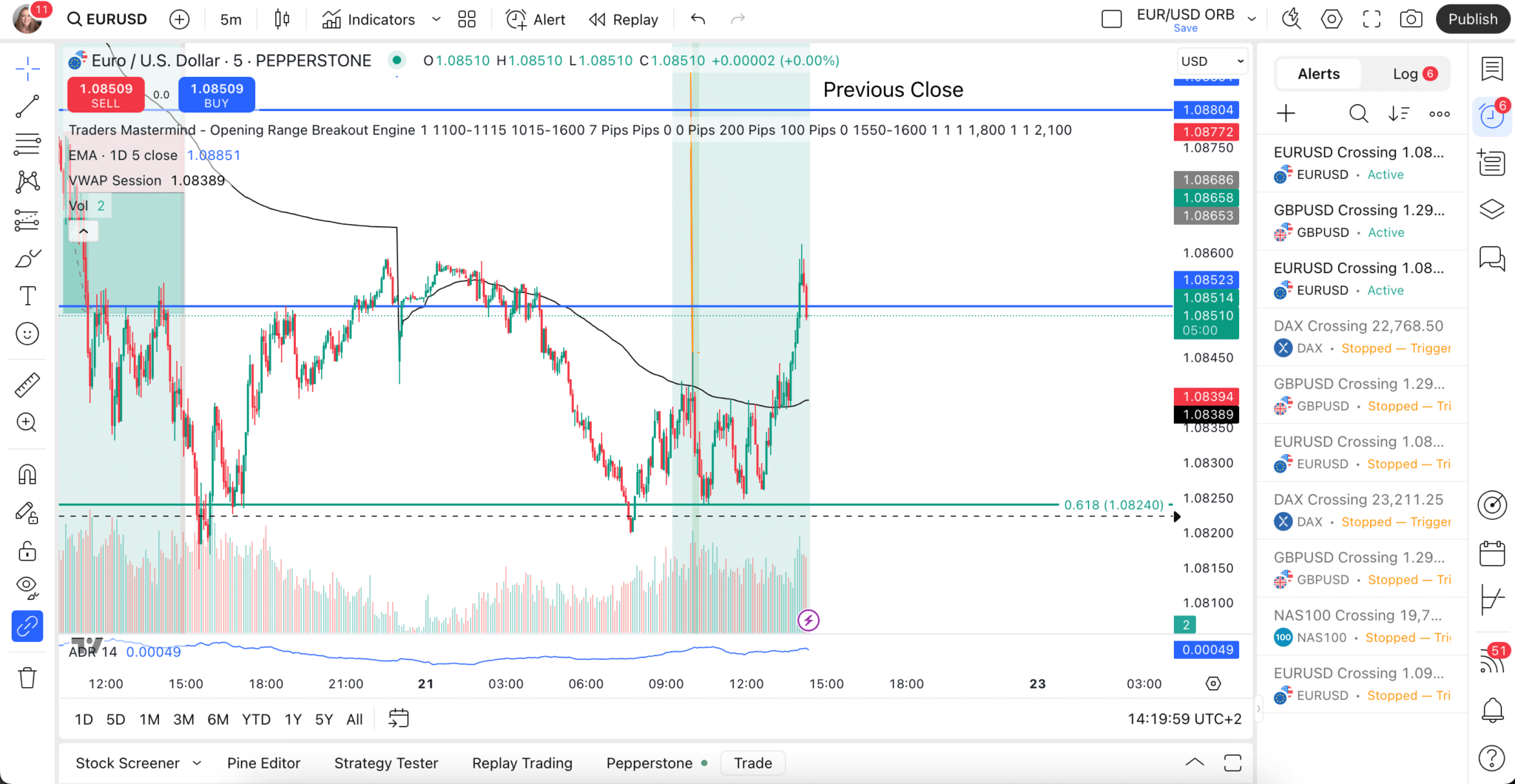
Trade the US Volatility Index with tight spreads and low latency — perfect for reacting to sharp VIX moves.
Access VIX on MT4, MT5, cTrader, and TradingView — a rare offering for traders who use custom charting setups or social strategies.
Hosted on Equinix servers with sub-30ms execution, ensuring minimal slippage during high volatility spikes.
Use market depth, dynamic take profits, and volatility-focused indicators to better manage VIX entries and exits.
Despite strong credibility, South African clients are onboarded under offshore licenses — no local investor protection.
Traders incur conversion costs since accounts must be funded in USD, GBP, or EUR.
Pepperstone | Best For: Traders who want lightning-fast VIX trading via multiple platforms like TradingView, MT5, and cTrader with razor-tight spreads.
FxScouts
YouTube
Select another broker to another broker to compare features, fees, and platforms side by side.
0.9 pips
ISA, FRSA, CBI, FSA-Japan, FSCA, ASIC, CySEC
ZAR 1900
AvaOptions, Avatrade Social, MT5, MT4
400:1
AvaTrade is fully licensed in South Africa, offering local bank transfers in ZAR and full legal protection under FAIS.
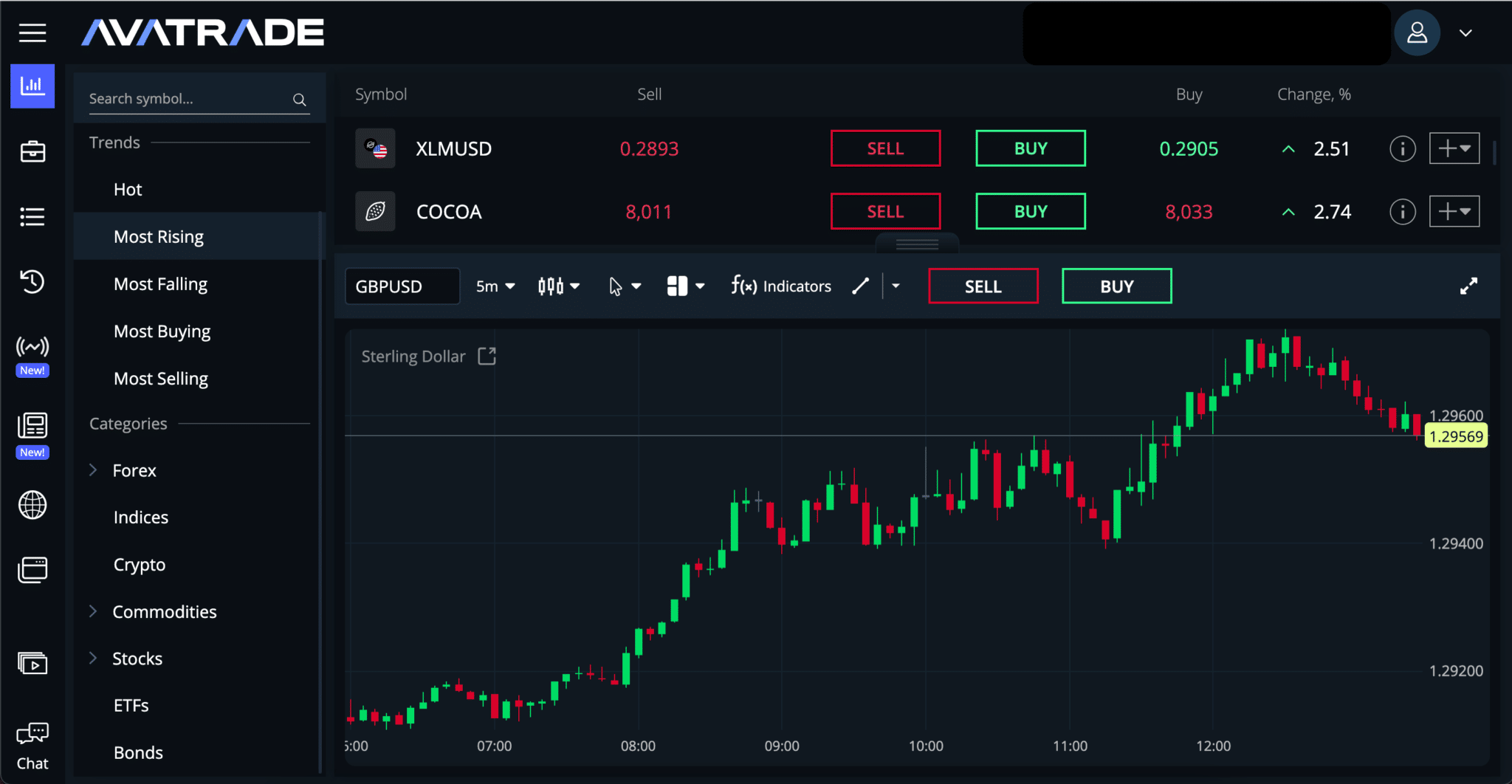
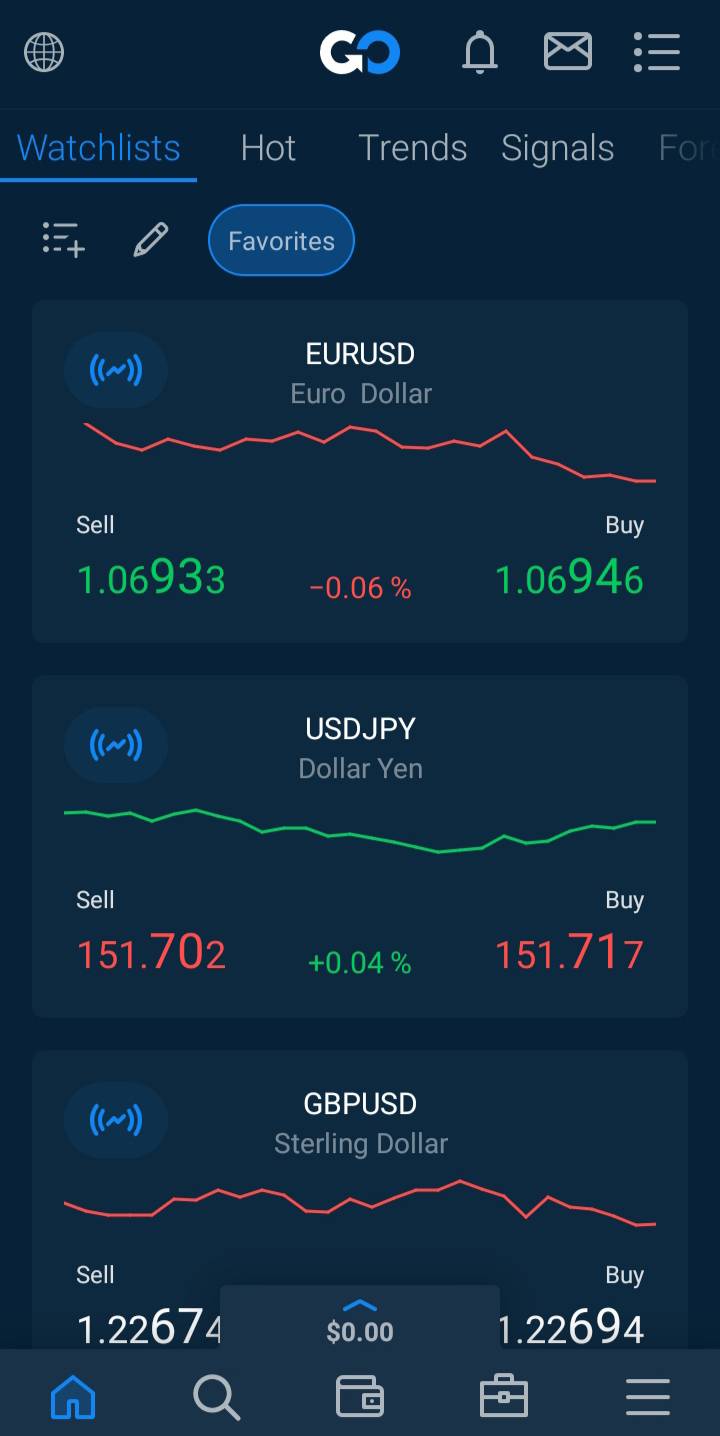
Traders can access the US Volatility Index (VIX) on MT5 and AvaTradeGO with fixed spreads, even during volatile conditions.
AvaTradeGO and WebTrader provide an intuitive interface for trading the VIX without needing advanced technical tools.
AvaTrade Academy includes VIX trading tutorials, market sentiment explainers, and volatility strategy guides tailored for CFD users.
During low-volatility periods, fixed spreads may be wider than ECN brokers like FP Markets or Pepperstone.
AvaTradeGO lacks advanced technical charting tools and scripting capabilities compared to TradingView or MT5.
AvaTrade | Best For: South African traders seeking fixed-spread access to the VIX via a simple, FSCA-regulated platform with beginner support.
FxScouts
YouTube
Select another broker to another broker to compare features, fees, and platforms side by side.
0.0 pips
CMA, FSA-Seychelles, FSC, DFSA, FSCA, FCA
ZAR 0
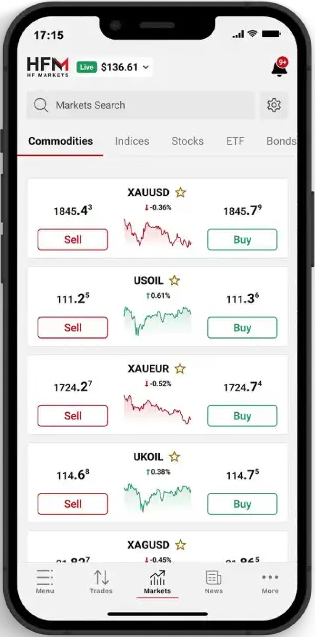
HFM Trading App, MT5, MT4
2000:1
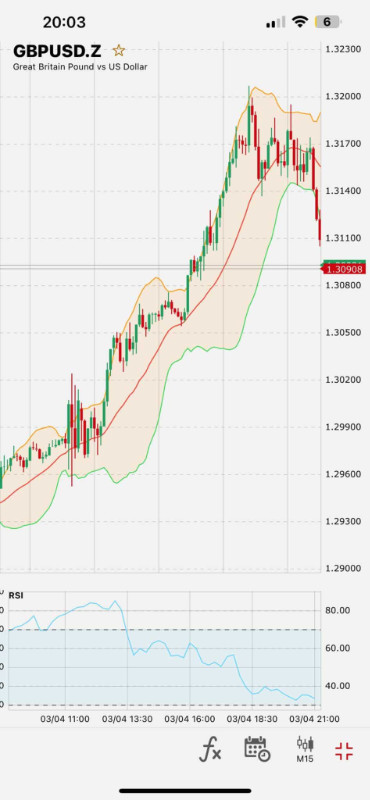
Traders can access the US Volatility Index via MT5 with competitive leverage and access to HFM's fast execution servers.
Fully licensed in South Africa, with Rand-based accounts and fast funding through local banks — ideal for domestic traders.
Trade VIX CFDs with any account size — perfect for testing volatility strategies without upfront capital commitment.
Access up to 1:2000 leverage (risk-adjusted by instrument), providing capital flexibility for VIX-related hedging or speculation.
No TradingView or cTrader integration — VIX can only be traded via MT5, which may not suit all technical traders.
HFM operates as an STP broker, but lacks true ECN order routing or market depth visibility found in platforms like FP Markets.
HFM | Best For: South African traders looking for VIX exposure on MT5 with ZAR deposits and FSCA oversight at ultra-low minimum deposit levels.
FxScouts
YouTube
Select another broker to another broker to compare features, fees, and platforms side by side.
0.6 pips
DFSA, FSC, FSCA, ASIC, CySEC
USD 5
MT5, MT4
1000:1
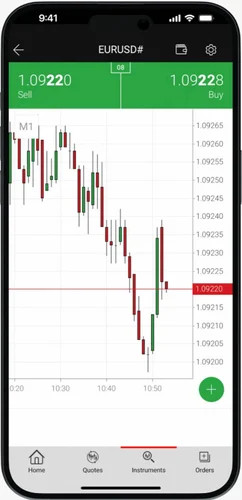
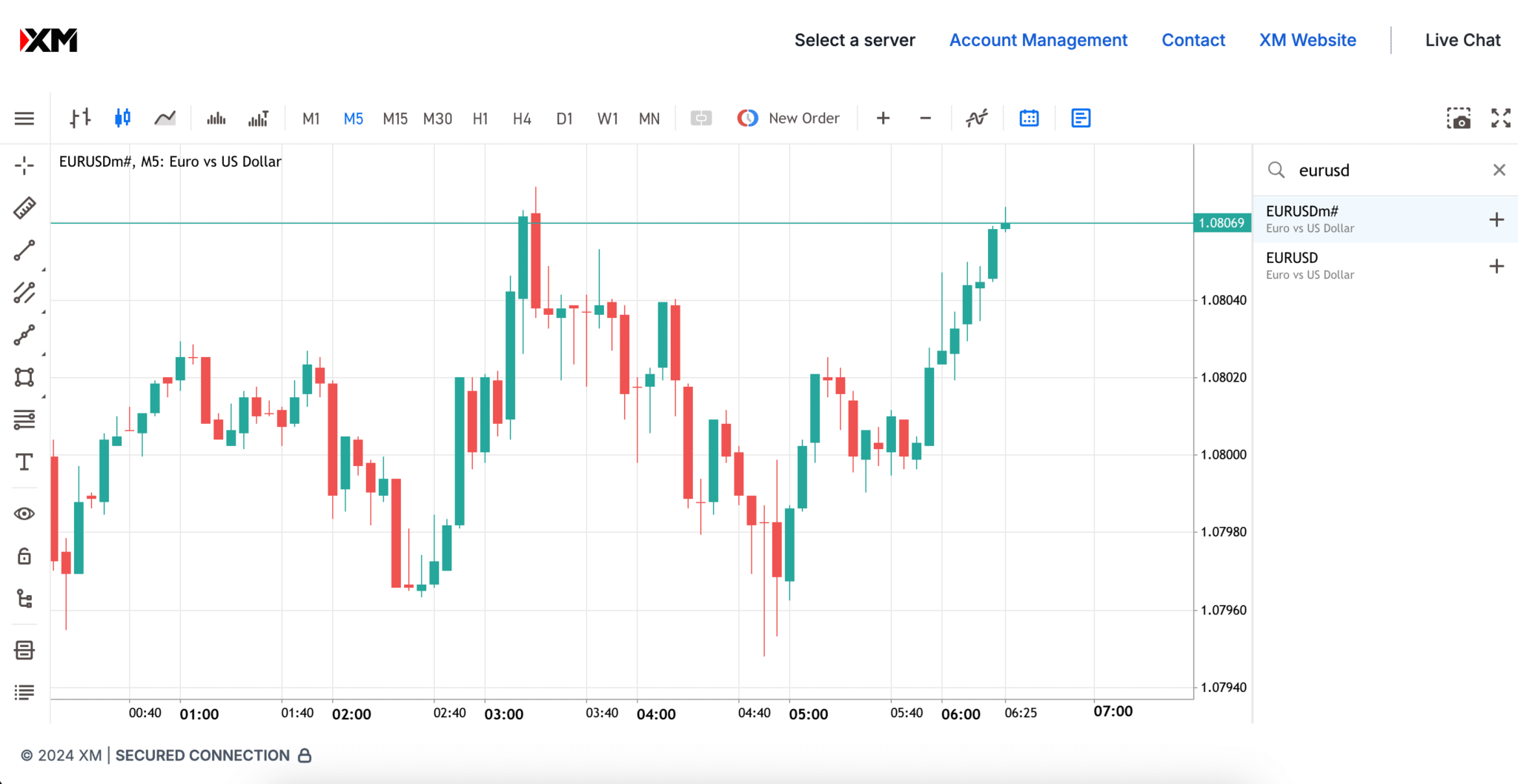
XM provides the VIX on MT5, allowing traders to speculate on fear and market volatility with tight floating spreads.
Traders can open positions as small as 0.01 lots — useful for sizing carefully in highly volatile VIX conditions.
Open a live account with just $5, making XM one of the most accessible brokers for volatility index experimentation.
XM runs webinars, articles, and video tutorials including VIX-related macro topics, helping new traders understand volatility events.
XM ZA (Pty) Ltd is FSCA-authorised (FSP 49976), but only as an intermediary. Trading accounts are with XM Global Ltd in Belize, meaning South Africans are not protected under FSCA’s trading regulations.
VIX trading is limited to MT5; there's no TradingView, cTrader, or proprietary platform access for traders needing advanced analytics.
XM | Best For: Beginner traders interested in trading the VIX index with micro lots and low deposit requirements through a simple MT5 interface.
FxScouts
YouTube
Select another broker to another broker to compare features, fees, and platforms side by side.


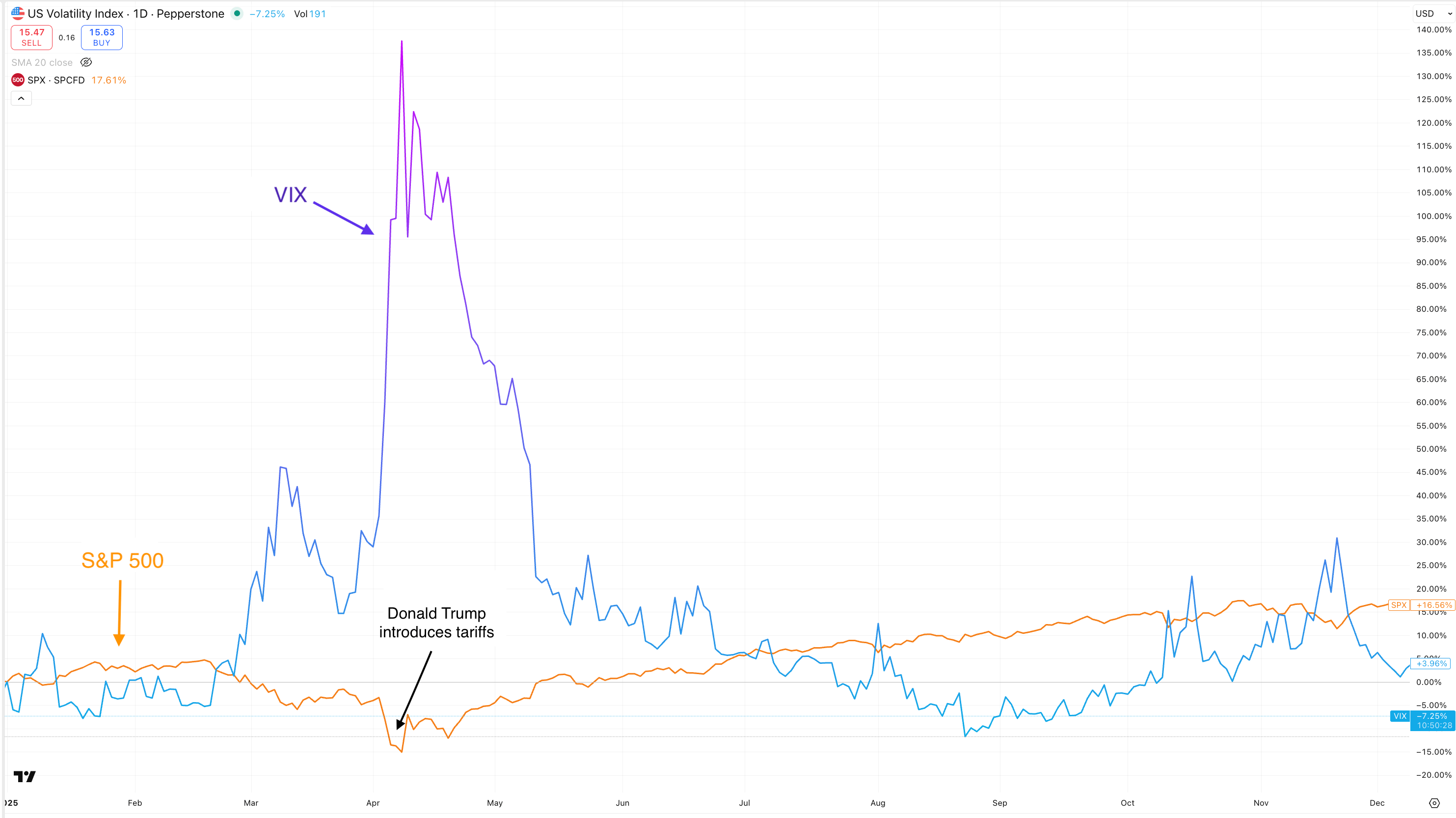
The VIX is the ticker for the CBOE Volatility Index, a forward-looking measure of expected 30-day volatility in the S&P 500, derived from SPX options prices. Traders use it to gauge market sentiment, hedge equity exposure, or trade volatility directly.
The VIX isn’t a “normal” index like the S&P 500 — it measures expected volatility, not price direction. When investors become nervous, demand for S&P 500 options rises, implied volatility increases, and the VIX typically climbs. When markets calm down, implied volatility falls and the VIX drops.
In practice, the VIX often rises during market sell-offs and major risk events — which is why it’s widely known as a fear gauge. Importantly, it’s forward-looking, reflecting what the options market expects over roughly the next month, not what volatility was in the past.
You can’t buy the VIX directly. Instead, traders gain exposure through derivative or packaged products, depending on the broker and region. The most common options include:
Most VIX traders fall into one of two groups:
When markets drop hard, volatility usually rises. That’s why many investors use VIX products to offset downside risk in equity-heavy portfolios. For example, if your portfolio is mostly US stocks and you expect turbulence, a VIX position may help reduce the impact of a drawdown.
Some traders don’t hedge — they trade volatility itself. VIX spikes can create short-term momentum opportunities, but they also come with sharper moves, wider spreads, and higher execution risk.
Trading the VIX gives traders a direct way to position for changes in market fear, uncertainty, and volatility — often behaving very differently from traditional assets.
Key advantages include:
VIX trading can be effective — but it’s also one of the most misunderstood areas of retail trading, and it comes with unique risks.
Main downsides to understand:
VIX options are often used as defined-risk hedges, because option buyers can cap their maximum loss at the premium paid.
This is one reason VIX options remain popular: they offer a structured way to trade volatility with clearer risk limits than leveraged spot products.
Not all brokers offer the same volatility products — and “VIX trading” can mean very different instruments. Some brokers focus on regulated markets like options and ETFs, while others offer CFDs or synthetic volatility indices.
When choosing a broker in 2026, prioritise the factors that directly affect cost, execution, and risk control:
Start with what you actually want to trade:
Volatility products can be fee-sensitive. Compare:
A strong VIX broker should offer:
VIX trading is tied to macro events and sentiment — good brokers should provide:
Volatility moves fast. Look for:
Trading the VIX can be useful for both speculation and hedging, but volatility products behave differently from standard markets and carry higher risk — especially through options, futures, or leveraged CFDs. The key is choosing a broker that gives you the right VIX product access, transparent costs, stable execution, and strong risk controls. If you’re new to volatility trading, start small, use defined-risk tools, and treat the VIX as a strategic instrument — not a shortcut to fast profits.


Answers to some of the most common questions traders ask about trading the VIX.
The VIX is the CBOE Volatility Index, a measure of expected 30-day volatility in the S&P 500, calculated from SPX options pricing.
Buying VIX options varies slightly by platform, but most brokers follow the same process: search the symbol, open the options chain, choose expiry/strike, and place the order.
VIX trading can be extremely risky, especially through leveraged derivatives. Volatility can spike quickly, spreads can widen, and pricing can behave differently than most traders expect.
No. You can’t buy the index itself — you access it through products like options, futures, ETFs/ETNs, or CFDs.
Many investors buy VIX call options when they expect market stress. If volatility rises during a sell-off, the VIX position can help offset portfolio losses.
The best brokers combine competitive fees, strong derivatives platforms, full options-chain access, stable execution, and solid research tools.
There isn’t one universal “cheapest” broker — total cost depends on commission, spreads, platform fees, and how you trade.
Explore more resources that fellow traders find helpful! Check out these other guides to enhance your forex trading knowledge and skills. Whether you’re searching for the best brokers, educational material, or something more specific, we’ve got you covered.

Compare the best Forex trading platforms for 2026, including MT4, MT5, cTrader, and TradingView. Find the right tools to enhance your trading experience.

What is Forex trading and how does it work? An easy-to-read guide including how to trade, and how to choose a reliable broker.

Compare FSCA-regulated forex brokers in South Africa by ZAR accounts, local deposit methods, withdrawal speed, spreads, and platform support. Independently tested for South African traders.
60-90% of retail traders lose money trading Forex and CFDs. You should consider whether you understand how CFDs and leveraged trading work and if you can afford the high risk of losing your money. We may receive compensation when you click on links to products we review. Please read our advertising disclosure. By using this website, you agree to our Terms of Service.
Partner Manager and Financial Writer
Head of Content
Financial Writer




Welcome to the FxScouts community! We’re thrilled to have you on board. You’ve successfully signed up for our forex newsletter, where you’ll receive expert insights, market analysis, and the latest news straight to your inbox.
Get ready to stay ahead of the curve with our regular updates designed to help you make informed trading decisions.
Happy trading!
The FxScouts Team